Sunday, January 10, 2010
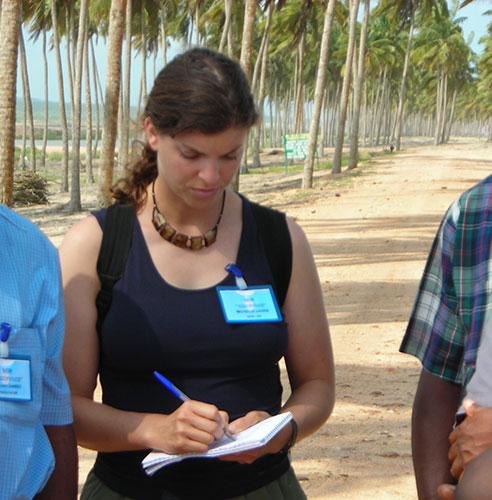
After spending a month off-line, I was convinced it is essential for one’s health. The neck and shoulder aches were gone, I read more in the papers and had conversations over breakfasts rather than over emails. In East Africa, I appreciated the big landscapes, time that stood still and poli poli (slowly slowly in Swahili) way of life.
Once back to my ‘real’ world, I found out from a friend on Facebook how to fold bottom sheets (with the help of a You Tube video). This has always been a mystery for me so indeed I appreciated the quick and very interesting information. For me, the simple discovery epitomized the wonderfully bizarre information era we live in.
This morning I am reading in Wired Magazine about a company that specializes in creating in demand online videos. It’s about making the cheapest, fastest content for Internet users that are searching through their 4000 videos and articles published every single day. Likely they are the ones who solicited the bed sheet folding video. Pretty amazing. I wonder what else I might learn about if I type my questions into google?
My work takes me into the world of technology as well as the world of people. I enjoy the slowness off-line but I also depend on the Internet, media and globalization for my livelihood. How else could I live in the woods and continue to connect, share and collaborate on projects all over the world?
This morning I am reflecting on the irony of all these different realities. I may stay at this computer and catch up on emails and work. Or I may head back to the fireplace and watch the flicker from the couch with hot tea in hand. Both are good…but…the fireplace wins this morning.
Saturday, December 5, 2009
For the next three weeks, I will remove the computer from my life. This experiment will help me relearn life as it was before email, Facebook and Google searching became my norms. My hope is to read books (off-line) and pay attention to all that is around me outside of my global connections facilitated through online mechanisms. It is a temporary escape into a non-tech reality that was my ‘norm’ only ten years ago. I will share what I learn in the New Year. Happy holidays!
Wednesday, November 25, 2009

What does small talk have to do with Knowledge Management and getting ahead? Everything according to Canada’s national news. Small talk is a first step in networking which often helps people find jobs. Networking is a medium to create relationships, learn about people and ultimately build trust. These are the foundations for knowledge management. They are also the blocks for building one’s career.
Apparently, those who are good at small talk get more jobs, raises and move through the ranks to higher positions.
A couple examples ring true:
- Five great people applied for a job and it was difficult to choose. The one who got the job is he who spoke to the secretary in the waiting room and showed interest in learning about the company.
- Three people applied for a job teaching at a school. The one who talked to the interviewee about the photos on his wall, fishing and children got the job. He also had the lowest grades.
Success doesn’t come from good grades alone. The ability to connect, i.e. small talk, is what is moving careers. Developing a repor with colleagues, making others feel comfortable and building trust all lead to people wanting to work with you more.
In summary, the heart of Knowledge Management is connecting people, ideas and experience. Small talk is the starting point for making these connections. If you are interested in people and their lives, you are fortunate. If small talk is your weak point, start practicing!
Monday, November 16, 2009
A lot of my work takes place in the form of meetings. I am participating in other people’s meetings or planning my own meetings. Meetings can be a great forum for communication and knowledge sharing though sometimes they don’t always turn out that way.
I was struck recently by an article published by the Asian Development Bank called Conducting Effective Meetings. It made me think about the different types of meetings we hold and their various natures. In understanding the difference between an advisory meeting and a committee meeting, how might I conduct it differently?
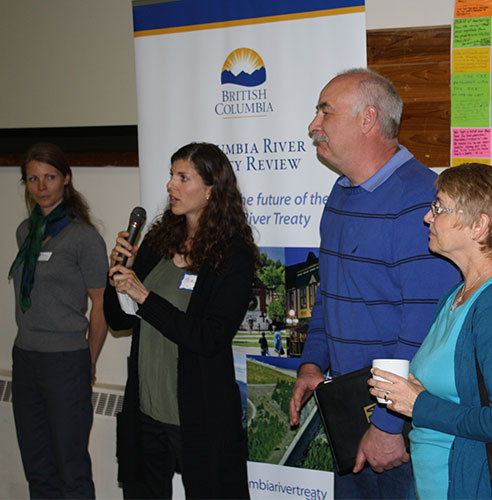
I am planning an advisory committee meeting for December 1st and based on the article I will pay attention to some underlying realities such as: the advisory meeting is to share information, listen to questions/views and seek advice.
Some things I have been preparing in order to have a successful meeting have been:
- using technology to go beyond the traditional teleconference (we will use GoTo Webinar)
- polling for a convenient date/time for everyone using doodle.com
- providing opportunities for agenda input
- providing an agenda with specific objectives and time allocations as well as background documents at least a week in advance
- ensuring the topics for discussion are interesting, well thought out and have clear questions that I seek advice on
I have two weeks further to prep. I will keep you posted on how it goes.
Wednesday, October 21, 2009
I recently read a short piece that questioned the concept of Best Practices. This really resonates with me.
Often I am persuaded to write best practices as summaries to my work, for example in case studies. However I tend to agree with David Gurteen, author of the ’Knowledge Letter’: ”Instead of looking at best practice, focus your attention on the particularities of your situation, trying to understand all the factors at work, not just those prescribed in your model or best practice. Reflect on how your own participation is affecting, and is affected by, the way these factors are playing out in your organisation. That way you can help to make sure your attention is on what really matters so much more than a best practice or model. Ask how you or others are interacting with each other and influencing each other in the process of getting the work done.” In other words “think for yourself!”
This philosophy is important for my work. Rather than directing the communities I am working with to follow the best practices of those before them, I am trying to encourage them to use the lessons as a guide but decide their own activities and future. Innovation means tweaking the norm and taking risks. As David Gurteen says, it means thinking for yourself. I can support that.
Monday, July 27, 2009
Anyone interested in understanding social media, its value and its relationship to business should check out the 15 very short clips by Euan Semple.
http://www.guruonline.tv/business-social-media
From the website:
In this exclusive interview, social media expert Euan Semple breaks social media down into easy to understand terms and explains not only why every business should at least have a look at social media but also how they can make a start without the need of employing expensive agencies and IT professionals.
Wednesday, July 15, 2009

The potential house
I am buying my first house. I am told by family and friends that this is one of the biggest decisions I will make in my life. Given I am shy of long term commitments, they are correct. The two key words I think about in learning about buying a house are Trust and Knowledge Management.
Trust is very important in buying an old house. If one doesn’t know much about homes, building or renovations, one needs to trust the people who hold this knowledge.
The realtor is the interface between your new house and the buyer. The agent should look out for your best interest and help get you what you want. After this, you have the home inspector, the potential contractors and builders and friends who help you assess if the house is solid, fixable, and a good buy. If these people are strangers to you, family might come into play and add their two cents based on experience.
Knowledge Management is very important in several ways.
First, in order to have the full picture of the house you are buying you need to draw on several sources. Using relationships and networks to find people you trust to provide input builds confidence in the decision making process.
Second, online research is important to ground truth information. If there is a lack of trust in any of the people you rely on to make the purchase decision, online resources provide background information, provincial regulations and additional questions to consider.
My situation has been mixed. I am using my networks to bring as much information to the table as possible so I can make an informed decision. When in doubt, I find more human and online resources to verify my thinking. I am learning that trust is essential in making a large purchase decision. However, it really boils down to gut instincts and the rest is justification for rationale minds!
Monday, April 20, 2009
Canada's Youth Summit Team - October 2001
For anyone who spent time writing a master’s thesis, you will understand my feelings of joy. I recently published an excerpt of my thesis in a book called: Young people, education, and sustainable development - Exploring principles, perspectives, and praxis.
In 2003, I wrote my master’s thesis on Canada’s Youth Summit Team. This was a select group of diverse, geographically representative youth helping Canada’s government and young people prepare for the World Summit on Sustainable Development (2002).
After two years of volunteering on the project with the United Nation’s Association in Canada and then researching and writing a thesis about the experience, I am pleased that others might share and learn from my reflections.
The book will be launched at the forthcoming 12th General Conference of the Association of African Universities (AAU) in Abuja, Nigeria from May 4 – 9, 2009 and the 5th World Congress on Environmental Education (WEEC 5) from May 10-14, 2009 in Montreal, Canada.